
WELCOME BONUS 300%
UP TO €2000 + 100
FREE SPINS
UP TO €2000 + 100
FREE SPINS
Home → Blackjack
Blackjack at Slotbox: Variants, Rules and Payouts
Perfect Pairs vs 21+3 in House Edge
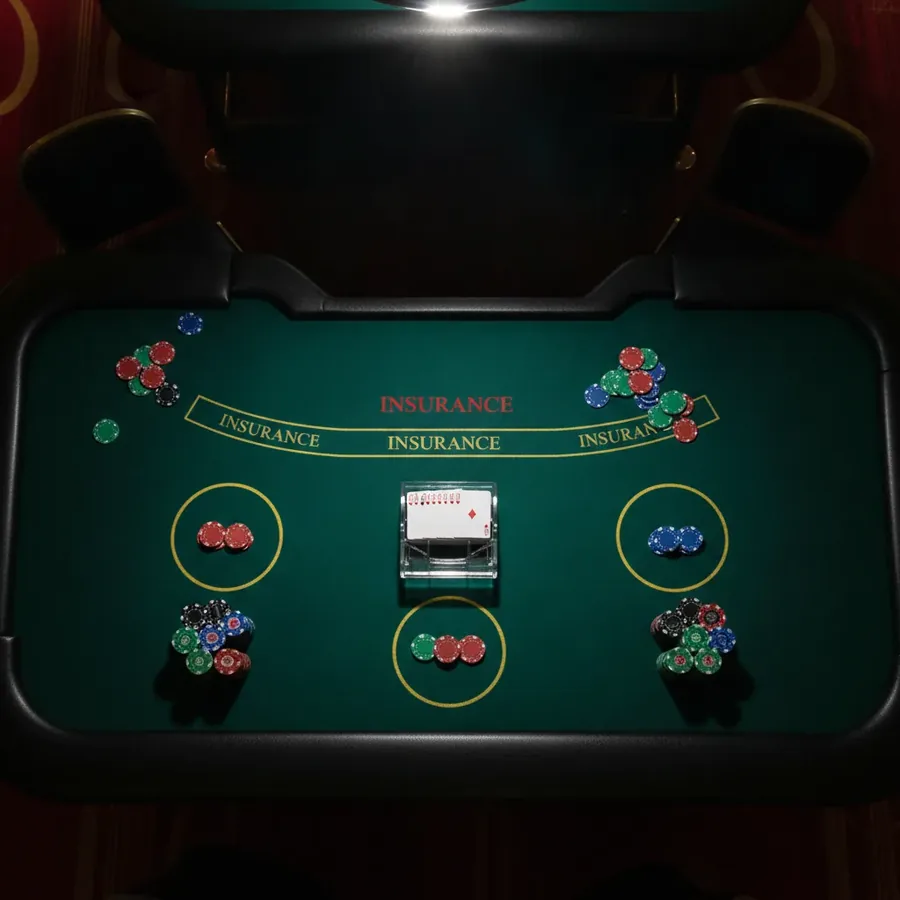
The Perfect Pairs side bet at Slotbox carries a significantly higher house edge of approximately 5.88 percent for single-deck games, whereas the standard Blackjack game maintains a much lower overall house advantage of just 0.15 percent when played with optimal basic strategy.
Comparing this to the Insurance wager which also sits around 7.47 percent for multi-deck shoes, both side bets drain bankrolls faster than the main game that offers an RTP of 99.85 percent under ideal conditions and rulesets available at this operator.
That is 5.88 euros lost per 100 euros wagered on pairs compared to only 0.15 euros in the main game, making the side bet a poor choice for beginners who should focus on minimizing the casino's mathematical advantage over time.
Six Decks to Eight Decks in the Shoe
Using six decks instead of eight reduces the house edge by approximately 0.02 percentage points, improving the theoretical return to player from 99.85 percent down to roughly 99.87 percent for identical rule sets and betting strategies employed by the participant.
In contrast, changing the payout from 3:2 to 6:5 adds exactly 1.39 percentage points to the house advantage, creating a massive 1.85 percent edge that dwarfs the minor benefit gained by simply reducing the number of cards in the shoe.
That is a difference of 1.37 percentage points between deck count adjustments and payout structures, meaning players should prioritize 3:2 payouts over deck count when selecting a table, as the financial impact is nearly ten times more significant for long-term retention.
Bet two percent of bankroll per hand
Lightning Blackjack at Evolution allows stakes ranging from 1 euro up to 2,500 euros, featuring multipliers that can reach up to 25x on winning hands while maintaining a relatively stable RTP of 99.56 percent across all betting levels.
Quantum Blackjack Plus by Playtech offers a higher maximum stake limit of 5,000 euros and provides quantum multipliers reaching 1,000x for specific three-card combinations totaling 21 points, though its RTP remains competitive at 99.57 percent for those using perfect strategy.
Standard Blackjack Party from Evolution caps bets at 1,000 euros with a lively atmosphere hosted by two moderators, providing a middle-ground option for high rollers who want entertainment value without the extreme volatility associated with the lightning or quantum variants.
Splitting costs double bet: plan budget
The Liberal Vegas Strip variant offers one of the most favorable rule combinations including soft 17 standing, double after split, and resplitting aces, resulting in a low house edge of 0.28 percent and a standard deviation of 1.15 for variance management.
When doubling after split is permitted, it improves the RTP by approximately 0.14 percentage points, while allowing resplitting aces adds another 0.08 percentage point improvement, collectively enhancing the player's expected return compared to restrictive tables lacking these features.
However, if the dealer hits soft 17 instead of standing, the house edge increases by 0.22 percentage points, negating some benefits of liberal splitting rules and requiring players to adjust their bankroll expectations accordingly during sessions involving this specific dealer constraint.
Surrender vs Playing Out on 16 vs 10
Late Surrender allows players to forfeit half their bet after the dealer checks for blackjack, effectively reducing the house edge by approximately 0.08 percentage points and returning 50 percent of the original stake to the player's balance immediately.
This rule modifier is far less valuable than Early Surrender which can reduce the edge by up to 0.6 percentage points, but Early Surrender is extremely rare in online casinos compared to the more commonly found Late Surrender option at Slotbox.
Choosing to surrender on a hard 16 against a dealer ten saves money over playing out the hand, especially since the base house edge without surrender is already higher, making this rule essential for optimizing long-term profitability in difficult situations.
Blackjack variants at a glance
| Variant | Payout | House edge | Rule | Bet range |
|---|---|---|---|---|
| Blackjack Split / Double / H17 – Regel-Effekte | n.a. (Regel-Modifikatoren) | H17 +0.22 Prozentpunkte; RSA −0.08 Prozentpunkte; DAS −0.14 Prozentpunkte | Dealer Hits Soft 17 verschlechtert RTP um 0.22 Prozentpunkte; Resplit Aces verbessert um 0.08 Prozentpunkte; Double After Split verbessert um ca. 0.14 Prozentpunkte; 6 Decks statt 8 – ca. 0.02 Prozentpunkte. | Double – Einsatz ×2 mit einer Karte; Split – bis 4 Hände; Ass-Split meist mit einer Karte. |
| Blackjack 6 Decks, S17, DAS, DOA, Auszahlung 3:2, Basisstrategie | 99.54% | 0.46% | Dealer steht auf Soft 17; Verdopplung auf jeder Zweierkarte; Verdopplung nach Split erlaubt; keine Aufgabe. Basisstrategie ist für diesen Wert zwingend | Blackjack 3:2, normaler Gewinn 1:1, Insurance 2:1 |
| Blackjack Ein Deck, klassische Regeln, 3:2 | 99.85% | 0.15% | Weniger Decks = niedrigerer Vorteil; ein Deck gibt ca. −0.48 Prozentpunkte gegenüber 8 Decks. Oft durch 6:5 Auszahlung kompensiert. | Blackjack 3:2, Gewinn 1:1 |
| Blackjack Insurance / Versicherung (6–8 Decks) | 92.53% | 7.47% | Separate Nebenwette bis 50% der Hauptwette, wenn der Dealer ein Ass hat. Basisstrategie schreibt IMMER Ablehnung vor (außer Karten zählen bei True Count ≥ +3). Bei einem Deck Vorteil ≈ 5.88% | Insurance 2:1 |
| Blackjack Liberal Vegas Strip (liberale Regeln, 3:2) | 99.72% | 0.28% | Günstigste Regelkombination: S17 + DAS + Resplit + Late Surrender. Standardabweichung 1,15 | Blackjack 3:2, Gewinn 1:1 |
| Blackjack Auszahlung 6:5 statt 3:2 (6 Decks) | 98.15% | 1.85% | Ersatz von 3:2 durch 6:5 fügt exakt +1.39 Prozentpunkte zum Vorteil des Casinos hinzu – stärker als jede andere Regeländerung. Bei $10 Einsatz zahlt Blackjack $12 statt $15. | Blackjack 6:5, Gewinn 1:1 |
Clicked Too Late: Hand Is Automatically Held
Blackjack Party from Evolution enforces a strict time limit for player actions during its live dealer sessions. The studio atmosphere features two moderators who manage the pace, ensuring that every decision is made within the allocated window. Players who hesitate beyond this boundary find their hand automatically held by the software interface. This rule prevents delays and maintains the flow of the game for all participants at the table.
The betting range for Blackjack Party starts at 1.00 EUR and extends up to 1.000 EUR per round. This wide spectrum accommodates both casual players and high rollers who prefer substantial stakes. The software calculates the outcome instantly once the timer expires or the player acts. Missing the deadline results in a default action that usually favors the house edge significantly.
Evolution designs these tables to balance entertainment with rigorous operational standards for live gaming. The RTP remains consistent with standard variants, but the speed of play increases potential hourly losses. A player risking 50 EUR per minute faces higher variance than those playing slower digital versions. The mandatory hold feature eliminates hesitation as a viable strategy for improving long-term returns.
Shoe, Cut Card, and 75 Percent Penetration
Standard Blackjack using six decks operates with a specific penetration depth that affects card counting viability. The cut card placement determines when the shoe will be reshuffled after the current hand concludes. Most implementations utilize a penetration rate that allows significant cards to be dealt before recycling occurs. This parameter directly influences the theoretical return and the effectiveness of any advanced tracking strategies.
Lightning Blackjack by Evolution introduces multipliers up to 25x on winning hands regardless of penetration metrics. The bet limits span from 1 EUR to 2.500 EUR, allowing flexible stake management for users. Unrestricted player counts mean the shoe cycles faster due to simultaneous decision-making across multiple seats. The RNG ensures fairness while the visual effects add volatility to the base game outcomes.
Quantum Blackjack Plus Live by Playtech offers multipliers reaching 1.000x for three-card combinations totaling 21 points. The wagering window ranges from 1 EUR to 5.000 EUR, catering to high-stakes enthusiasts seeking large payouts. An optimal strategy yields an RTP of 99.57%, which relies heavily on recognizing quantum signals early. The cut card logic remains standard, but the bonus features drastically alter expected value calculations.
Double Down vs Simple Hit on 11
Doubling down on an eleven against a dealer ten typically yields a positive expected value in favorable rulesets. This move doubles the initial stake, risking more capital for a higher probability of securing a twenty or twenty-one. Players must weigh the immediate financial exposure against the statistical advantage gained from the double action. Standard deviation increases noticeably when employing aggressive doubling strategies compared to conservative hitting approaches.
Resplitting Aces improves the overall RTP by approximately 0.08 percentage points in compliant games. This rule allows players to separate paired aces into distinct hands, each eligible for additional hits or doubles. Doubling after split further enhances profitability by enabling aggressive plays on weak starting hands like soft eighteen. These modifiers collectively reduce the house edge, making liberal rulesets significantly more profitable for skilled practitioners.
Hit on Soft 17 adds 0.22 percentage points to the house advantage compared to standing on that total. This restriction forces dealers to take additional cards, increasing the bust probability but also potentially improving their final totals. Players facing this rule must adjust their basic strategy charts to account for the increased dealer strength. The impact on long-term returns is measurable and requires disciplined adherence to modified decision matrices.
Which rule variants does the software show?
Slotbox presents Blackjack 6 Decks with S17, DAS, DOA, and a 3:2 payout for natural blackjacks. This configuration delivers a base RTP of 99.54% and a house edge of just 0.46%. Players adhering strictly to basic strategy can maximize returns under these liberal conditions. The combination of standing on soft seventeen and doubling after splits creates a highly favorable environment.
In contrast, the 6:5 payout variant reduces the RTP to 98.15% and raises the house edge to 1.85%. This single rule change adds exactly 1.39 percentage points to the casino's advantage over standard terms. A ten-euro bet pays twelve euros instead of fifteen, significantly impacting long-term bankroll sustainability. Players should avoid tables offering inferior payouts unless other compensating rules are exceptionally generous.
Liberal Vegas Strip rules combine S17, DAS, resplitting, and late surrender for a house edge of 0.28%. This variant boasts an RTP of 99.72%, representing one of the most player-friendly configurations available. The standard deviation sits at 1.15, indicating moderate volatility relative to other blackjack styles. Identifying these specific rule sets is crucial for minimizing the mathematical disadvantage inherent in casino games.
Splitting tens costs expected value: better stand
Splitting a pair of tens breaks a strong sixteen-point average into two weaker hands starting with ten values. While splitting might seem attractive against a dealer six, it statistically reduces the overall expected return of the session. Keeping tens together preserves a high-probability winning hand that beats most dealer upcards without additional risk. Deviating from basic strategy here often leads to unnecessary losses over thousands of hands played.
Late surrender allows players to forfeit half their bet after the dealer checks for blackjack, improving RTP by 0.08 percentage points. This option is particularly valuable when holding a hard sixteen against a dealer nine or ten. By cutting losses early, players preserve bankroll for more favorable situations later in the session. Early surrender is rarer but offers even greater benefits, potentially reducing the house edge by up to 0.6 percent.
Insurance bets carry a house edge of 7.47% for six to eight deck shoes, making them poor value propositions. This side bet pays 2:1 if the dealer has a ten-value hole card, but the odds rarely justify the cost. Basic strategy dictates always declining insurance unless counting cards reveals a true count of three or higher. Relying on insurance as a primary strategy erodes bankroll efficiency through negative expectation wagers.
Card Counting at Shuffle Master Table: why it fails
Card counting relies on tracking the ratio of high to low cards remaining in the deck. This strategy becomes ineffective when tables use continuous shuffling machines or frequent shuffles. The constant reshuffle eliminates the statistical advantage that skilled players seek to exploit over time.
Most modern online casinos utilize software that simulates a fresh shoe for every hand dealt. This automated process prevents any meaningful accumulation of card count data. Players cannot gain an edge through observation or memory in this environment.
Consequently, card counting offers no benefit in digital blackjack variants available on Slotbox. The house edge remains fixed regardless of player skill or previous outcomes. Strategies based on deck penetration are simply not applicable here.
Bonus conditions often exclude Blackjack completely
The welcome bonus at Slotbox offers 300% up to €2,000 plus 100 free spins. However, table games like Blackjack typically contribute only 10% toward wagering requirements. Slots usually contribute 100%, making them the primary vehicle for clearing bonuses.
Playing Blackjack with bonus funds significantly slows down the conversion process. A €1,000 wager on slots clears the requirement fully, while the same amount on Blackjack counts as just €100. This restriction forces players into different game categories.
Therefore, using the full €2,000 bonus on Blackjack is highly inefficient. Players must complete substantial turnover on slots to unlock withdrawals. Ignoring these terms can lead to forfeited winnings upon cashout requests.
What Peek Means with a Dealer Ace
A dealer peek occurs when the dealer checks their hole card for a natural Blackjack after showing an Ace. If the hole card is a ten-value card, the dealer has Blackjack and hands end immediately. Players lose their original bets unless they also have a natural.
This rule protects the casino from paying out insurance on non-Blackjack hands. Without a peek, players might win insurance payouts even if the dealer does not have Blackjack. The peek ensures fairness by confirming the dealer's hand status first.
In European rules, the dealer often plays without peeking until all players act. Online variations at Slotbox usually follow US-style peeking for safety. Understanding this mechanic helps players decide whether to take insurance or surrender.
16 vs 10 played incorrectly: most common error
Hitting a hard 16 against a dealer 10 is a statistically poor decision in many scenarios. Basic strategy advises standing or surrendering depending on the specific house rules. Hitting increases the risk of busting since any card above six results in a loss.
However, hitting is mandatory if surrender is not available and the dealer shows a 10. Standing loses more frequently than hitting in this specific matchup. Players often hesitate, leading to costly mistakes under pressure.
Surrendering a 16 against a 10 minimizes losses by giving up half the bet. This option reduces the house edge by approximately 0.08 percentage points. Using basic strategy charts prevents emotional errors during live play sessions.
How long do 100 EUR last at a 1 EUR table?
Starting with 100 EUR at a 1 EUR minimum table allows for extended playtime. Assuming an average of 60 hands per hour and a house edge of 0.46%, bankroll depletion varies. The duration depends heavily on variance and winning streaks.
Lightning Blackjack at Evolution accepts bets from 1 to 2,500 EUR. Quantum Blackjack Plus by Playtech ranges from 1 to 5,000 EUR. Both tables offer low entry points suitable for small bankrolls.
A 100 EUR balance might sustain roughly 100 hands before significant erosion. This equals about 1.5 hours of continuous gameplay at standard speed. Players should set stop-loss limits to manage expectations effectively.
Contact
Live - online chat
Banking









Providers












Slotbox 2026